
Teresa Hackett, EIFL Copyright and Libraries Programme Manager, celebrates the 10th anniversary of the entry into force of the Marrakesh Treaty by sharing stories about how libraries in three EIFL partner countries are using the treaty and changing the lives of blind, visually impaired and otherwise print disabled people.
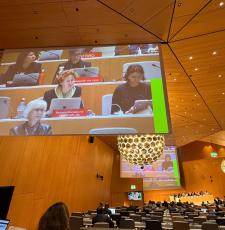
On 30 September 2016, three years after its adoption by WIPO member states, the Marrakesh Treaty for persons with print disabilities entered into force when the required number of countries (20 in total) joined the treaty. Since then, any country joining the treaty is formally bound to enact national copyright exceptions giving people with print disabilities, as well as libraries and other authorized entities, the right to make and share accessible format copies, including across borders. (In a small number of countries, international treaties have direct effect, meaning that the treaty automatically becomes law without the need for implementing legislation).
In prarctical terms, this means that a library may convert a printed book, for example, into an accessible format, such as Braille or DAISY, for a person with a print disability without having to seek permission from the rightsholder. The library may also exchange accessible formats with libraries in other Marrakesh-compliant countries.
Librarians in three EIFL partner countries that are members of the Marrakesh Treaty, Lithuania, Armenia and Ukraine, share their stories about the positive impact on services for people with print disabilities creating opportunities to learn, study and participate in cultural life on an equal basis with others.
The Marrakesh Treaty in Lithuania: from international agreement to real-world access to books
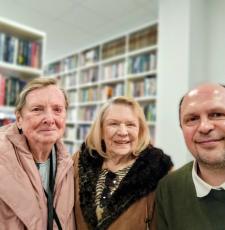
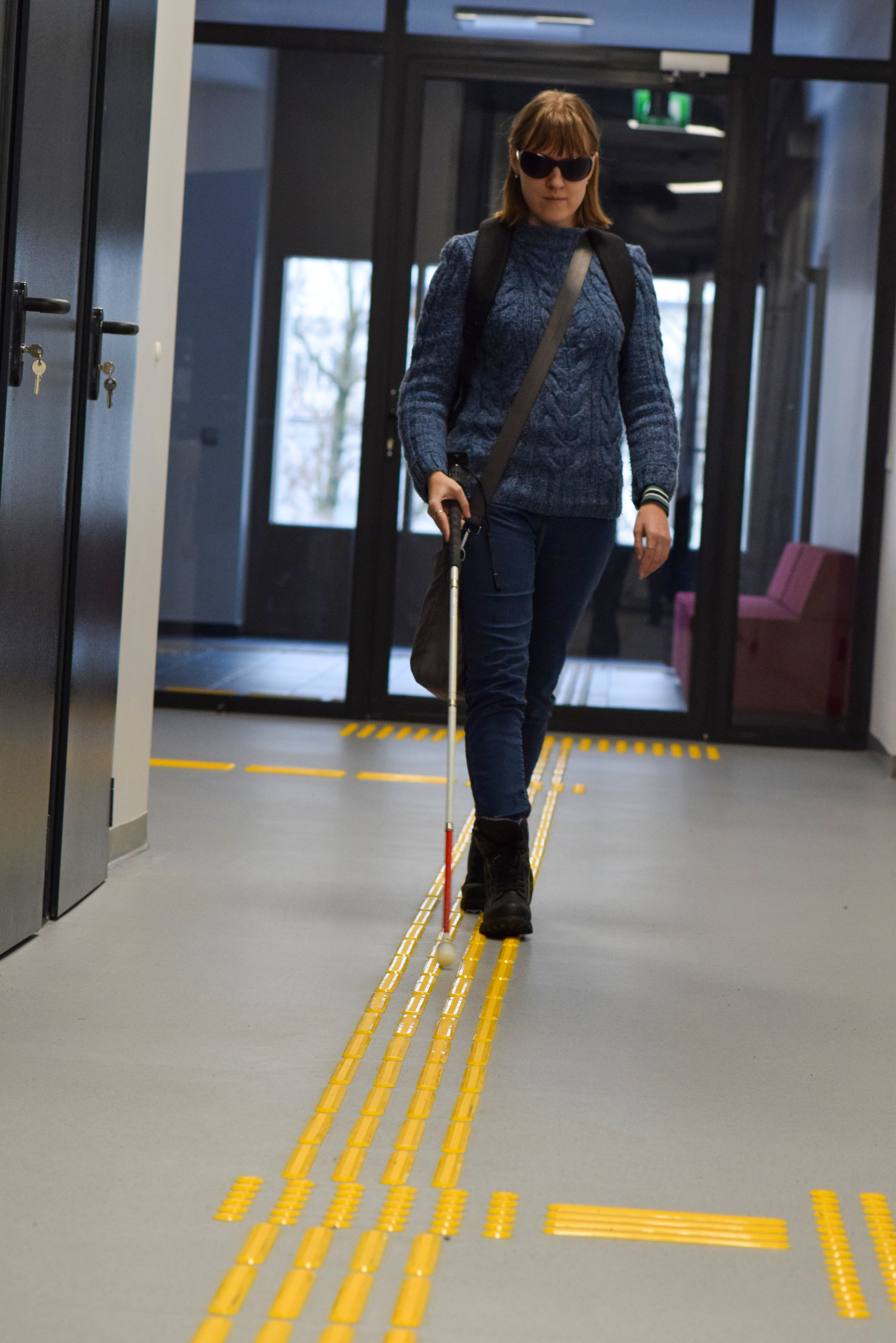 The Lithuanian Audiosensory Library (LAB) serves people in Lithuania with print disabilities. Every couple of months, LAB updates its online catalogue with a new batch of audiobooks in Spanish. These titles are added to the virtual library shelves mainly at the request of one reader, Aldona Zilinskas, a Lithuanian who was raised in Venezuela. Although Aldona speaks fluent Lithuanian, she finds it more comfortable to read in Spanish, the language she grew up with.
Since 2025, LAB’s collection of Spanish books has expanded to include 47 works of fiction obtained from libraries in Spain and Argentina that serve readers with print disabilities. And the nice surprise is that these books have been used by LAB's other patrons nearly 1,000 times, illustrating how one reader’s request has become a resource valued by the wider community.
“The Marrakesh Treaty is much more than an international agreement. It is a practical tool that gives people who cannot read standard printed text the opportunity to discover literature from all over the world in any language for work, study or leisure.” – Inga Davidonienė, Director, Lithuanian Audiosensory Library.
For Ugnė Žilytė, who pursued a doctoral degree in education at Vilnius University, the ability to access books from other countries fundamentally changed her academic opportunities.
“The Marrakesh Treaty opened the door to a much wider selection of literature than I otherwise would have had - I was able to read books in foreign languages, successfully complete my studies, and expand my knowledge on other topics,” says Ugnė Žilytė.
And a young library patron decided to learn English by reading children’s books about sport, one of his favourite subjects. LAB obtained the requested titles in English in electronic Braille (BRF format), and with a Braille reader borrowed from LAB, he soon mastered the basics.
The cross-border benefits of the Marrakesh Treaty in numbers
In 2022, LAB joined the Accessible Books Consortium (ABC), established by WIPO in 2014 to support the practical goals of the Marrakesh Treaty. Through ABC’s Global Book Service, LAB has expanded its collection with 286 publications from 11 countries (Argentina, Australia, Estonia, France, Israel, New Zealand, Poland, Spain, the UK, USA and Germany). The titles are in 10 different languages, cover all genres (fiction for children and adults, biographies, education, citizenship & democracy), and are available to the almost 9,000 registered library users.
In addition, LAB has made over 7,600 items in Lithuanian available to other countries bound by the Marrakesh Treaty. Members of ABC, as well as individual libraries in the U.S. and India, have made use of the resources.
Following Russia’s invasion of Ukraine in 2022, LAB has also been working to ensure that Ukrainians in Lithuania, and other Marrakesh countries, who have been displaced as a result of the war can read books in their native language. In partnership with the Lviv Branch of the National Assembly of People with Disabilities of Ukraine, LAB offers over 200 audiobooks in Ukrainian for children and teenagers with visual impairments, and they also provide material in Braille.
The Marrakesh Treaty in Armenia: blazing a trail for inclusive library services
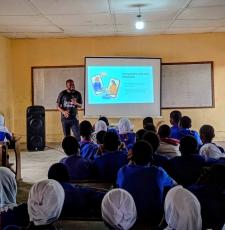
In 2022, within six months of Armenia’s accession to the Marrakesh Treaty, the National Library of Armenia signed a cooperation agreement with WIPO’s ABC piloting the production of school textbooks according to international standards. Five staff from the National Library received training in accessible publishing that resulted in the production of more than six dozen specially selected books in a range of accessible digital text and audio, and print formats. Library staff introduced the electronic formats to students at the main specialized school in Armenia, N14 School for Children with Visual Impairments named after Nikoghayos Tigranyan, and they donated the printed Braille and large-print editions to the school.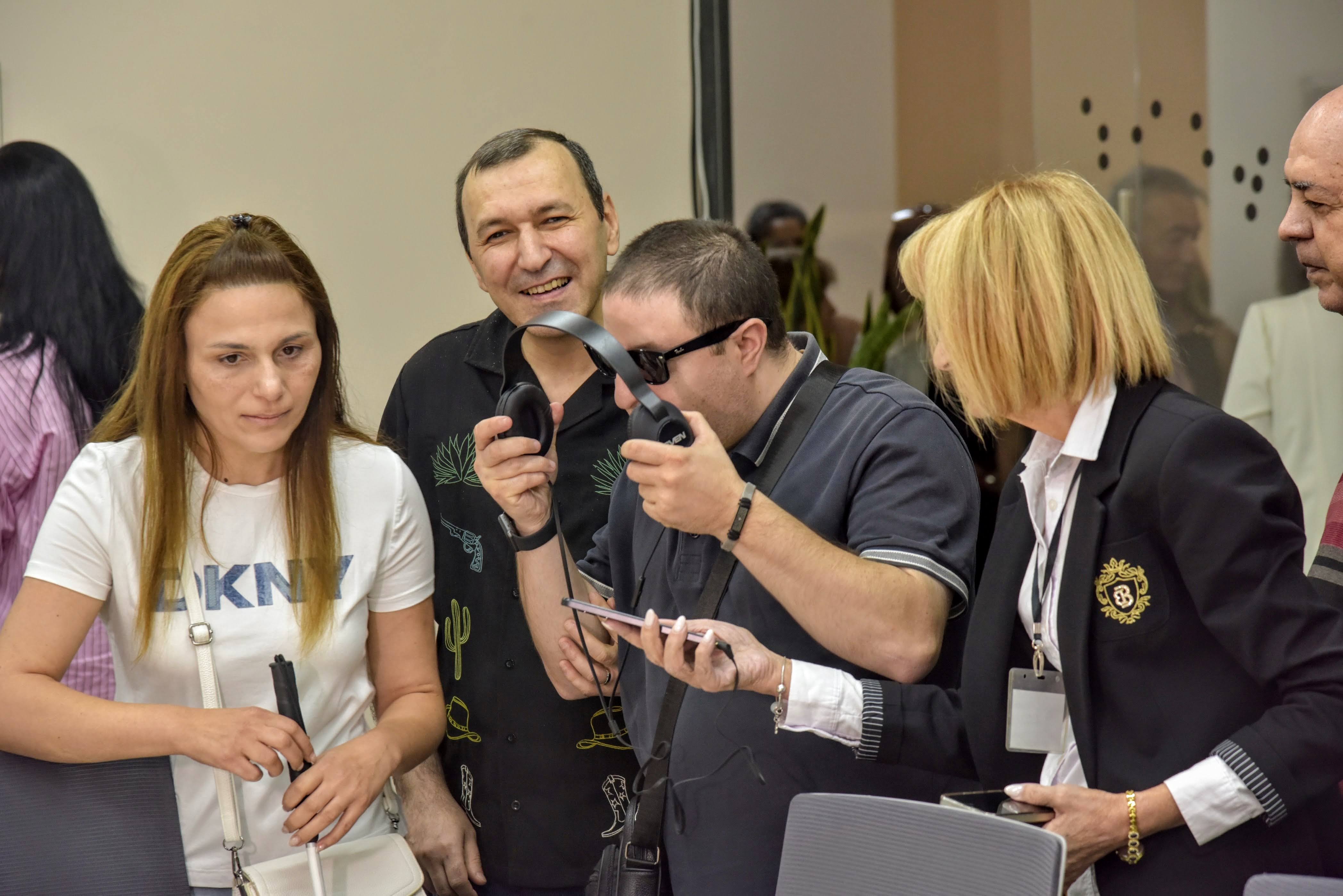
At the same time, the National Library decided to address an important technical issue to ensure that digitized resources in Armenian, one of the world's oldest languages with its own unique alphabet, are fully accessible. The library teamed up with a local data science company to develop Optical Character Recognition (OCR) software for Armenian writing that includes fonts, diacritics and character combinations not found in Latin-based alphabets, such as English or French. This pioneering work ensures the production of quality machine-readable texts in Armenian for applications such as Braille transcription and screen readers, expanding Armenian-language content available to people with print disabilities.
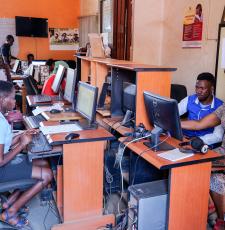
And on 9th September 2026, a bright, new Assistive Technology Reading Hall was officially opened at the National Library by the Deputy Minister of Education, Science, Culture and Sports, Alfred Kocharyan. An on-demand service to convert printed materials into accessible formats was also launched. The new Reading Hall has access to a range of alternative formats, such as audio-recordings and Braille, as well as adaptive equipment for users to try out. The new on-demand service, that will respond to individual user needs, aims to focus particularly on resources that are less commonly available, such as non-fiction, educational material and academic literature.
“The Marrakesh Treaty provided the impetus and inspiration for much of our work on accessibility,” said Anna Chulyan, Director of the National Library. “The opening of the new Assistive Technology Reading Hall is not only the opening of a new space, it is also a testament to our commitment to the development of accessible and inclusive library services in Armenia.”
The Marrakesh Treaty in Ukraine: Braille sheet music is a hit
The Central Specialized Library of the Ukrainian Association of the Blind has been providing accessible books to blind and visually impaired people in Ukraine for over 90 years. Now, thanks to the Marrakesh Treaty, the work is international.
“Our readers can enjoy more books and can access resources that we never had before,” said Maria Potelyakhina, Acting Director, Central Specialized Library of the Ukrainian Association of the Blind. “In particular, Braille sheet music is especially popular with users. Through our membership of WIPO’s ABC, over 5,600 sheets of Braille music are available for download by library members.”
About the Marrakesh Treaty
The Marrakesh Treaty for persons with print disabilities was adopted by member states of the World Intellectual Property Organization (WIPO) on 27 June 2013, and it entered into force on 30 September 2016. The treaty set out to address the book famine - the fact that only 1-7% of published books are in a format that blind and visually impaired people can read. It did this by establishing mandatory copyright exceptions allowing the production and international transfer of accessible format copies.
By September 2026, EIFL is proud to have supported adoption of the Marrakesh Treaty by WIPO member states in 27 EIFL partner countries, over a fifth of the total number. Read more about EIFL’s work advocating for the Marrakesh Treaty here.
SHARE / PRINT


RECENT BLOGS